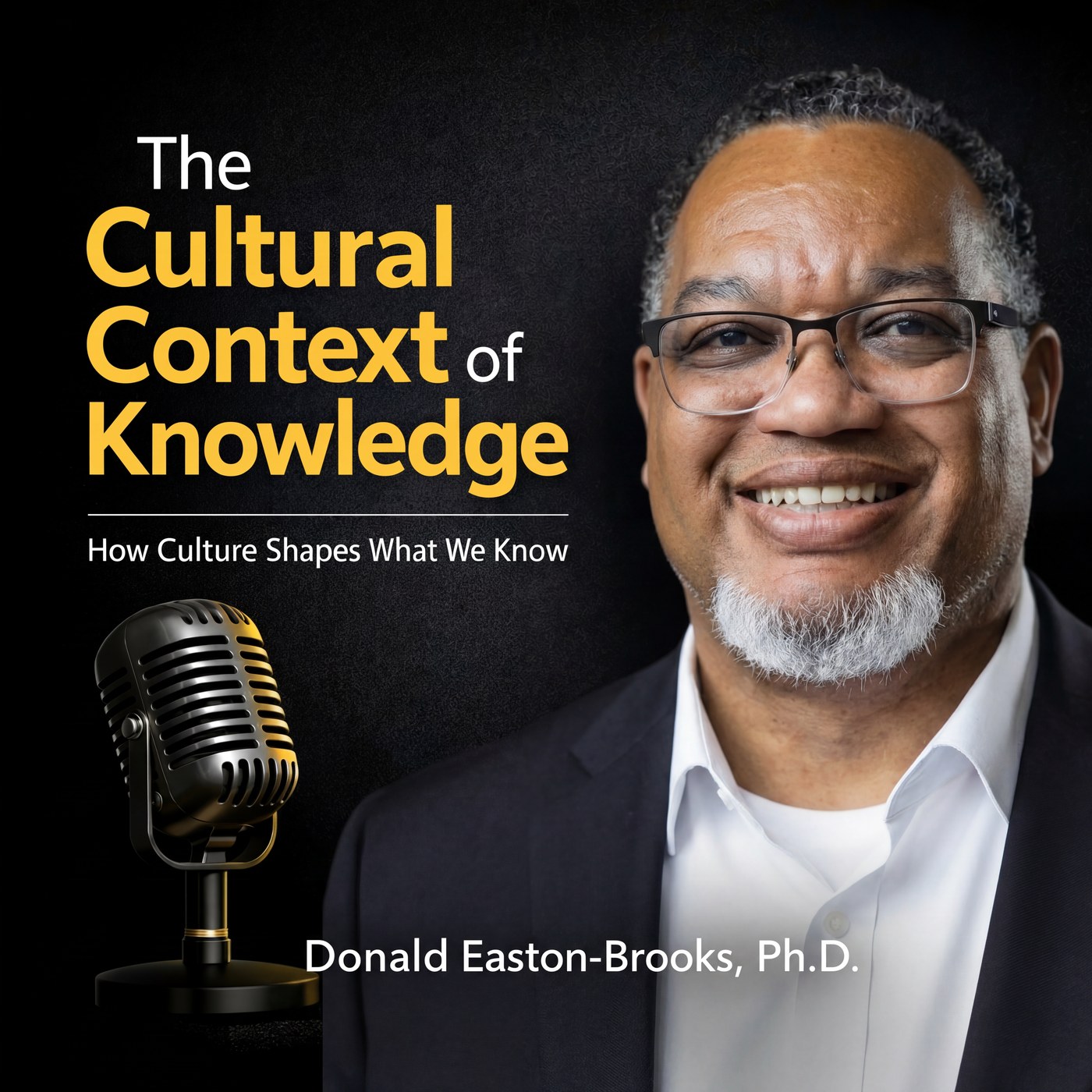
In the episode this week, I tell the story of San Francisco State in 1968: a five-month strike by the Third World Liberation Front and the first School of Ethnic Studies in the country. I tell it because the story is dramatic and the stakes were real. But the podcast had fourteen minutes. The argument has more.
This is the part of the argument the episode could not quite hold.
The method beneath the name
Something I notice, whenever ethnic studies enters a conversation, is that the phrase almost never arrives clean. People hear it already bent around whatever they were afraid of before they walked in. So I want to start here, in the written version, with a definition the episode had to move past quickly.
Ethnic studies is, at its core, a method. It is not a single conclusion about U.S. history and it is not a list of curricular add-ons. It is a disciplined practice of asking, of any historical account: whose perspective is being centered here, and whose perspective is in the margins, and what changes if we move the lens?
That last phrase is the one I keep coming back to. In the episode I used the California Gold Rush as an illustration. Same years, same state, same event. Read one way, it is a story of westward ambition. Read with the lens moved, it is also a story of indenture laws aimed at Indigenous children, of mining taxes designed to force Chinese laborers out of their livelihoods, of land-title courts that refused to recognize the Californios whose grants predated statehood.
Neither of those pictures is wrong. The point of ethnic studies is not that one replaces the other. The point is that a picture with only one angle is, by definition, incomplete. An undergraduate who has only seen the first picture has not learned the Gold Rush. They have learned a crop of it.
This is why the field describes itself as a method rather than a position. You can apply it to almost any subject: the Industrial Revolution, the history of medicine, the development of the modern university, the origins of state curriculum standards. The questions travel: who is centered, who is in the margins, what do we see when the lens moves. The answers change. The discipline is in asking.
What the research actually says
The episode gestured at the research evidence but did not name studies. The written version can — start here, with the foundational texts of the field:
- A Different Mirror: A History of Multicultural America by Ronald Takaki — a comprehensive survey of American history from the perspective of minority groups, considered a cornerstone of the field.
- An Indigenous Peoples’ History of the United States by Roxanne Dunbar-Ortiz — challenges the traditional narrative of U.S. history by centering the experiences of Native Americans.
- Bury My Heart at Wounded Knee: An Indian History of the American West by Dee Brown — offers an essential, alternative perspective on the colonization of the American West.
- A People’s History of the United States by Howard Zinn — a classic text that reexamines American history through the lens of ordinary people rather than political elites.
- Borderlands/La Frontera: The New Mestiza by Gloria Anzaldúa — explores themes of identity, culture, and life on the U.S.–Mexico border, often cited in discussions of biculturalism.
- This Bridge Called My Back: Writings by Radical Women of Color edited by Cherríe Moraga and Gloria Anzaldúa — a critical, foundational text in feminist theory, ethnic studies, and queer studies.
- Black Marxism: The Making of the Black Radical Tradition by Cedric J. Robinson — examines the development of the Black radical tradition in relation to Western civilization.
- The Souls of Black Folk by W.E.B. Du Bois — a foundational work in African American studies and sociology.
- Journey for Justice: The Life of Larry Itliong by Dawn Bohulano Mabalon & Gayle Romasanta — focuses on Filipino-American history and labor rights.
- Minor Feelings: An Asian American Reckoning by Cathy Park Hong — a contemporary look at Asian American identity.
- The Other Slavery: The Uncovered Story of Indian Enslavement in America by Andrés Reséndez — details the history of Native American enslavement.